Where basement water comes from
Basement water has a handful of sources. Groundwater pushes up through the slab when the soil is saturated. Surface runoff sinks next to the foundation and seeps through the wall. Gutters that dump at the corner of the house overload the soil there. Plumbing leaks produce a similar-looking problem, which is why we check them first.
A wet spot that appears only after heavy rain points to drainage. A wet spot that stays regardless of weather points to a supply or drain leak. Our leak detection team can rule that in or out before any waterproofing is sold to you.
Choosing between interior drainage and exterior work
Interior drainage and a sump pit suit you when
- Water enters at the floor edge or through the slab
- The exterior is paved, planted or too close to a neighbor to dig
- You want to keep the structure as is and manage water inside
- You need a lower-disruption plan
Exterior work suits you when
- Water comes through the wall above the floor
- Foundation cracks need repair from outside
- Grading or a failed downspout is feeding the problem
- Access around the house is open
In many houses the best fix combines both: correct the grading and downspouts, then add an interior drain and pump as a backstop. We explain which parts of the problem each step solves, so you are not paying for what you do not need.
Want to find out where the water is coming from?
Call and describe when and where it shows up. We will schedule a visit and tell you what we find.
Ridgewood's brooks and floodplain rules, and your basement
Ridgewood's Village Code, Chapter 154, lays out floodplain management and adopts the Bergen County flood maps effective August 28, 2019. The state-studied waters include the Saddle River, Ho-Ho-Kus Brook, Goffle Brook, Diamond Brook and Mannings Brook. The village has taken part in the National Flood Insurance Program since 1983, and its rules set the local design flood elevation one foot above the mapped base flood elevation.
The Army Corps of Engineers has also been authorized to study Ridgewood's flooding along the Ho-Ho-Kus Brook and the Saddle River. In September 2021, the remnants of Hurricane Ida caused heavy damage in parts of Ridgewood.
The takeaway for a homeowner is practical. If your property is near one of those streams, water can rise from the ground even when the street looks dry.
Waterproofing then needs to handle rising groundwater as well as runoff, and a battery backup for the pump becomes more valuable. We also work in Wyckoff and nearby towns, and the same questions apply to any low-lying lot. Check your lot against the flood maps, which are on file with the Village Engineer at 131 N Maple Ave.
Sump discharge: a Ridgewood rule that shapes the design
According to Chapter 238 of the Village Code, discharging stormwater, groundwater, roof water, pool water or sump water into the sanitary sewer is banned. The chapter provides for inspections and bills a monthly surcharge to the owner until the house complies. Unpaid charges can become a lien after 30 days, and reinstating an illicit connection after an inspection carries a fine for each violation.
That means a sump pump must discharge outdoors to a legal location, not into a floor drain or a sewer cleanout. We plan the discharge line, check valve and exit point so they comply and do not send water back toward your foundation. If you already have a pump with problems, see our sump pump installation and repair page.
How a waterproofing project runs
- 1
Find the source
We look at where and when water enters, check gutters, grading and plumbing, and take moisture readings.
- 2
Plan the system
You get a written scope covering drainage channel, pit, pump, discharge route and any sealing.
- 3
Install
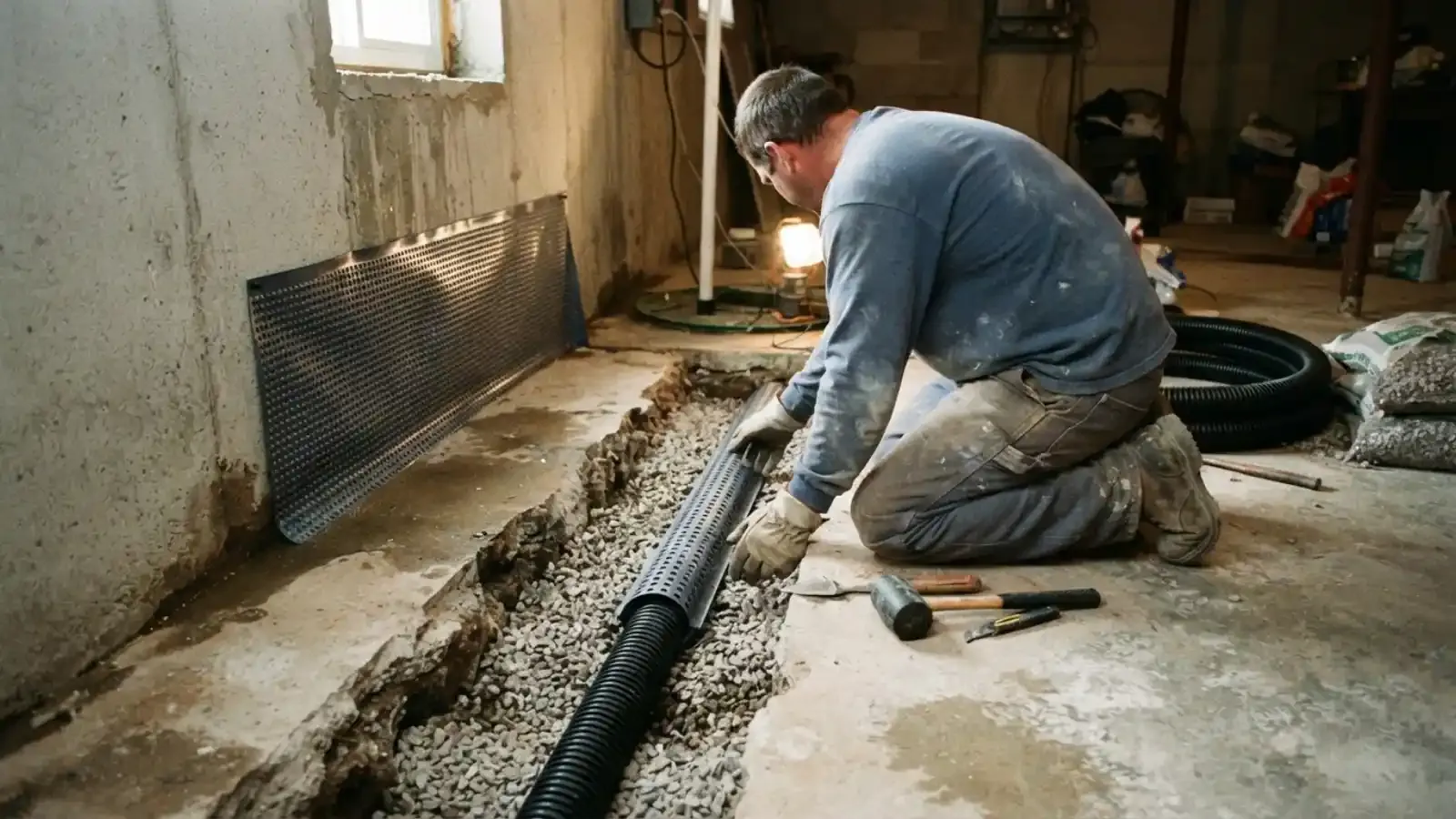
The slab edge is opened, drainage is laid in gravel, the pit and pump are set and the floor is patched.
- 4
Test and explain
We run water through the system, check the pump and discharge, and show you the maintenance points.
What drives the price of a waterproofing job
Pricing factors
Waterproofing is priced by how much water, how much floor and how hard the access is.
Call and we will explain which factors apply to your basement.
If water is rising fast right now, treat it as urgent and see our sump pump repair page. Otherwise, planned work gives us time to look at the cause and choose properly.
Ready to dry out your basement?
Call and tell us what you see. We will schedule a visit to find the source and plan the fix.
Basement waterproofing questions
Not quite. A sump pump removes water that collects in a pit. Waterproofing is the larger plan, which may include a drain channel, sealing, grading and a pump.
No. Ridgewood's code prohibits discharging sump water to the sanitary sewer, and noncompliance leads to surcharges and fines. The pump must discharge outdoors.
Water that appears after rain points to the ground. Water that appears in dry weather points to a leak. We check both.
It controls liquid water, which is the main goal. Some humidity may remain, and a dehumidifier can help for finished spaces.
If your property is near a brook or floodplain, or storms often cut power, it is worth considering. Water often rises when power fails.
Many are completed in a few days, depending on the length of drain and the floor finish. We give you a schedule with the scope.