Signs you may have a hidden leak
- A water bill that rises with no change in how you live
- The water meter moving while every fixture is off
- Warm spots on a floor, which can point to a hot water line
- A musty smell, peeling paint or bubbling drywall
- The sound of running water in a quiet house
- Unexplained soft or sunken ground in the yard, or a wet spot in the lawn
- Low pressure that develops with no clear cause
Not every sign means a leak. A running toilet is the most common cause of a high bill, and it is easy to check with a few drops of food coloring in the tank. Rule that out first, then move on to the meter.
A simple meter test you can do today
- 1
Stop all water use
Turn off faucets, the dishwasher, the washing machine and the ice maker. Make sure no one flushes a toilet.
- 2
Find the meter
It is usually near the main shutoff, in the basement or in a box near the curb. Lift the cover if needed.
- 3
Read the dial
Look for the small leak indicator, a triangle or a dial that spins, and note the reading.
- 4
Wait and compare
Wait thirty minutes without using water, then read it again. Any movement points to a leak somewhere.
- 5
Close the main valve
Shut the house main and check the meter again. If it still moves, the leak is between the meter and the house.
That last step tells you a lot. A meter that stops when the main is closed means the leak is inside the house. A meter that keeps moving means the leak is on the supply line before the shutoff, which is a different repair.
How plumbers find leaks without demolition
| Method | What it does | Best for |
|---|---|---|
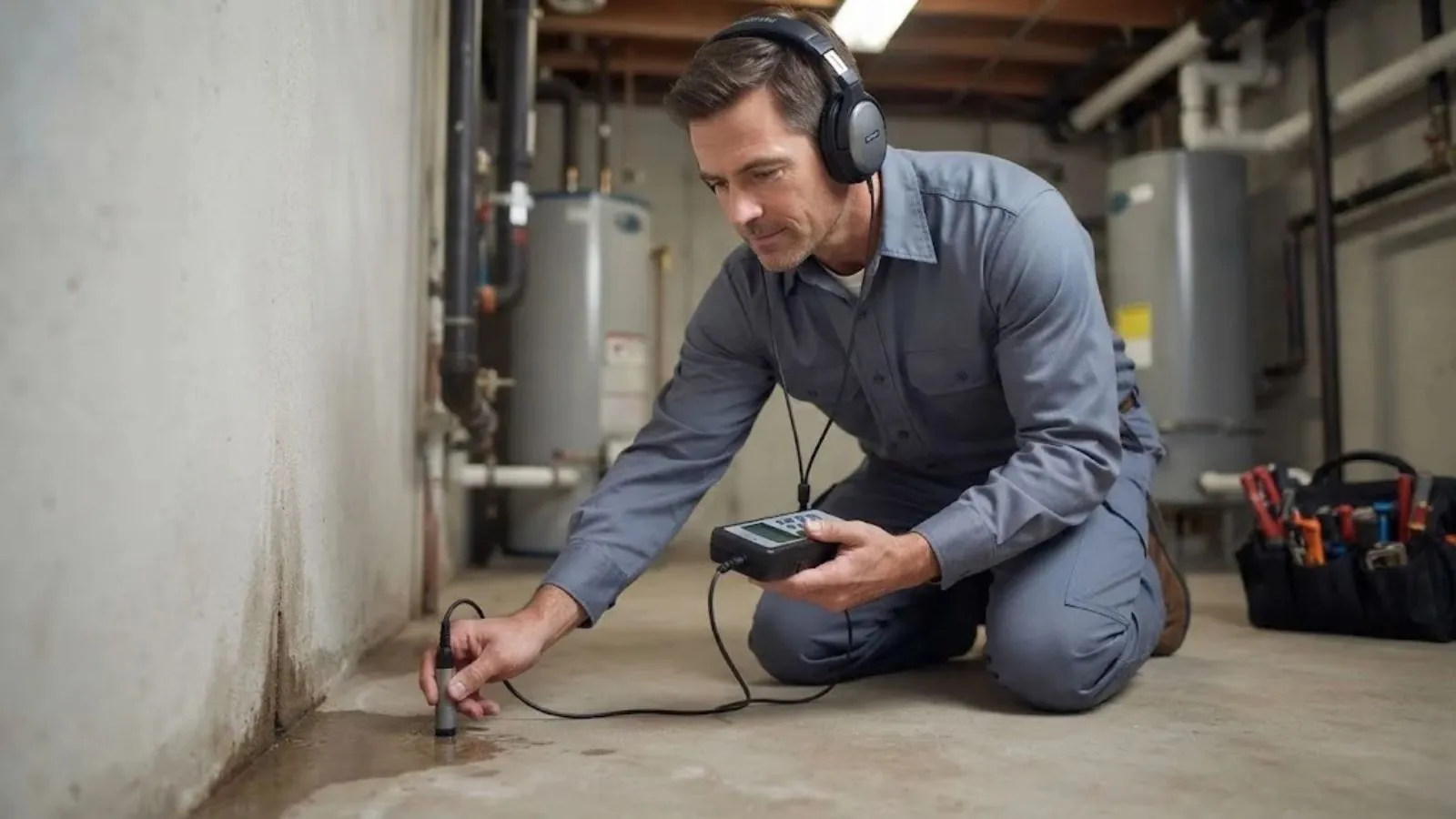
| Acoustic listening | Microphones pick up the sound of water escaping under pressure | Pressurized supply lines in walls, floors and slabs |
| Thermal imaging | An infrared camera shows temperature differences from wet areas | Hot water leaks and moisture behind surfaces |
| Moisture meter | Probes measure moisture in drywall, wood and masonry | Confirming the extent of water damage |
| Pressure testing | Isolates a section of pipe and watches for pressure loss | Narrowing which line is leaking |
| Tracer gas | A safe gas is sent through the pipes and detected where it escapes | Hard to locate or underground leaks |
| Sewer camera | A camera inspects drain lines for cracks and breaks | Drain and waste leaks |
Plumbers often combine two or three methods to confirm a location before cutting anything open. The goal is a small, precise access point instead of a large hole in a wall or floor.
The factors that decide the price
What moves the cost of leak detection
A quote depends on the job in front of the plumber. These are the items that change it most.
Ask whether the quote covers locating only, or locating plus a repair plan.
Want a plumber to find the source?
Describe the bill, the stain or the meter reading, and a plumber can explain which method fits your case.
Detection only, or detection and repair
Many companies price detection and repair as separate items, which is fair, because the search can take longer or shorter than expected. Ask whether the detection fee is credited toward the repair if you hire the same plumber.
Be careful with a quote that bundles detection with a specific repair before the leak is located. The scope cannot be known until the leak is found.
Slab leaks and underground lines
Leaks under a concrete slab or in buried lines are among the hardest to find. Water can travel along a pipe before it surfaces, so the wet spot may be far from the break. Acoustic gear and tracer gas are the usual tools here.
A leak between the street and the house is a service line issue. Our burst pipe repair page covers emergencies on supply lines, and the section below explains who to call about the utility side.
Ridgewood Water and your meter
Ridgewood Water is the village-run utility serving Ridgewood, Glen Rock, Midland Park and Wyckoff, and its customer service line is 201-670-5520. If your meter test points to a leak before the house, call the utility as well as a plumber, since the public side of the service line is theirs.
Most of the system's water comes from deep groundwater wells, with some purchased supply at peak times. That means a leak at your house wastes treated water that the utility pumped and processed, a good reason to chase one down quickly.
Source type: Ridgewood Water customer notice and annual water quality report, published through Midland Park borough
Water damage and insurance
Document everything. Photograph the stains, the meter reading and any damage, and save the plumber's report. Insurance coverage varies by policy and cause, so ask your insurer what they need before repairs begin.
Many policies cover sudden and accidental leaks but treat long-term seepage differently. A plumber's written finding of where and how the leak started helps your claim.
Stopping the damage while you wait
- Shut off the main water valve if you cannot find the source or if water is spreading.
- Turn off the electricity to wet areas from the panel if it is safe to reach. If water is near outlets or the panel, stay out and call for help.
- Move furniture and belongings out of the wet area and lift rugs.
- Mop or use a wet vacuum, and run fans and a dehumidifier.
- Take photos before you clean up.
Drying within a day or two matters, because mold can start growing in damp materials quickly. A hidden leak that has run for weeks needs a closer look at the walls and insulation.
Choosing a plumber for leak detection
Ask what equipment they use and how many methods they combine. A plumber who owns only one tool will tend to recommend the one answer that tool gives.
According to the Division of Consumer Affairs, the state's online portal lets you look up a business or a person, so ask whether they hold a New Jersey master plumber license and confirm it there. Ask for a written scope and what happens if the leak cannot be found on the first visit. We cover homes in Midland Park and Waldwick, and our leak detection page explains the process in more detail.
Ready to find the leak?
Call and tell us about the bill, the meter and where you see damage. A plumber can recommend the next step.
Leak detection questions
Do the meter test. If the meter moves with every fixture off, a leak is likely. Also check toilets, which are the most common hidden source.
Most methods are non-invasive. Plumbers use listening gear, thermal cameras and pressure tests to locate the leak first, so any opening is small and precise.
Methods, equipment, report detail and whether repair is included all change the price. Ask for the scope in writing before you compare.
Call Ridgewood Water at 201-670-5520 and a plumber. The utility owns the public side of the service line, and the homeowner owns the private side from the curb to the building.
Some policies cover detection when it leads to a covered loss. Coverage differs, so call your insurer before work begins and keep the plumber's report.