Emergency shutoff: what to do before we arrive
Do these in order. Speed matters more than neatness.
Close the main shutoff
The main valve is usually where the water line enters the house, near the meter in the basement or a utility room. Turn the handle clockwise, or a quarter turn if it is a lever.
Relieve the pressure
Open the lowest faucet in the house and a few upstairs taps to drain the pipes. Flush a toilet once. This stops the split from weeping.
Turn off power and heaters
If water is near the panel or outlets, switch off the breaker only if you can do it standing dry. Turn off the water heater gas or power so it does not run empty.
Save what you can
Lift belongings off the floor, move rugs, and photograph the damage for your insurer. Mop and open windows to speed drying.
Water still coming through?
Call now. We will help you find the shutoff by phone and plan the repair.
Why pipes burst
A burst is usually the end of a longer story. Water pressure, freezing, corrosion and age all play a part, and the cause decides the repair.
Freezing
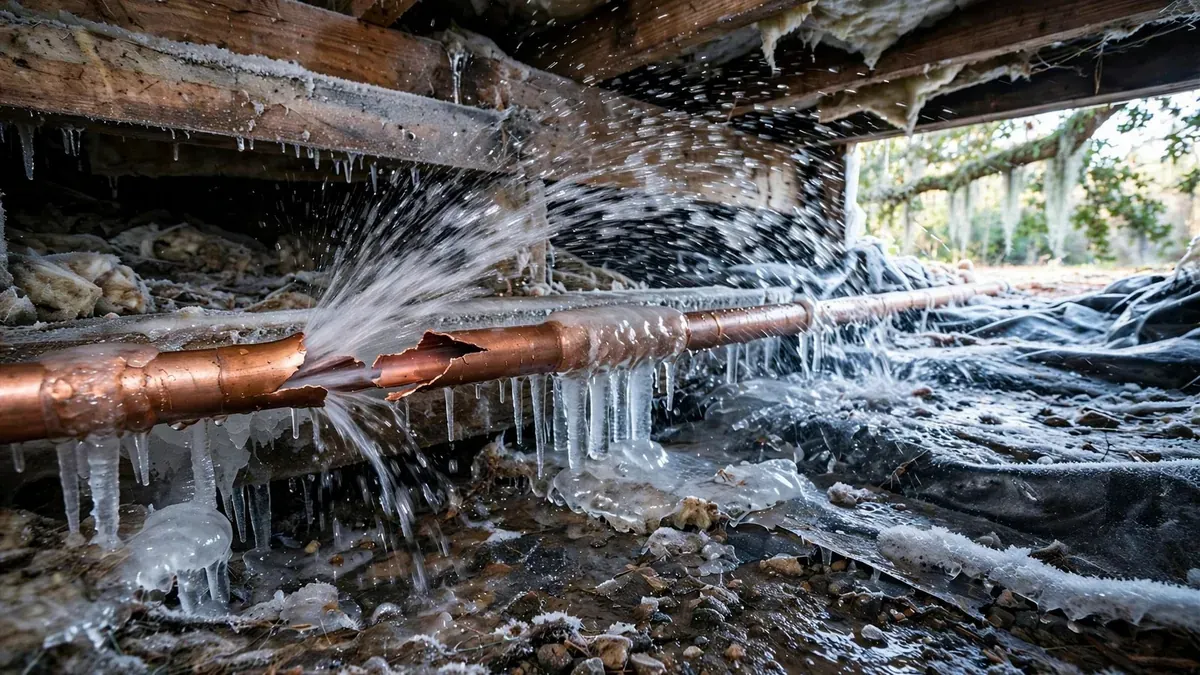
Water expands as it turns to ice. The split often opens later, when the ice melts and flow resumes. Pipes in exterior walls, crawl spaces and unheated garages are the usual victims.
Corrosion and age
Galvanized steel rusts from the inside and can fail at a threaded joint without warning. Old copper can pinhole.
High pressure or water hammer
A tight shutoff or a faulty pressure reducer can slam pipes and stress joints until one gives.
Mechanical damage
A nail, a drywall screw or a renovation hit can leave a pipe that fails weeks later.
Winter, frost depth and Ridgewood supply lines
According to the frost depth table in the New Jersey Uniform Construction Code, frost depth is 36 inches for northern New Jersey, which includes Bergen County. Underground water lines are meant to sit below that depth. Exposed pipes in an outside wall, a garage or a crawl space have no such protection.
During a hard freeze, open a faucet to a slow drip on the coldest exterior wall, keep cabinet doors open under sinks and keep the thermostat steady. If a pipe is frozen but not split, thawing slowly with warm air is safer than open flame.
The other local factor is the supply line from the street. Ridgewood Water has found more than 3,000 service lines that are wholly or partly lead, and the homeowner owns the private stretch from the curb to the building. A failure on that stretch is handled through water service line repair, and replacement of a lead line is coordinated with the utility.
If you do not know where the water is escaping, leak detection can trace it before anyone breaks into a wall.
Repair a section or repipe
A section repair works when
- The split is one short stretch
- The rest of the pipe is sound and in good condition
- It is a copper or PEX line with easy access
- The cause was freezing, not corrosion
Repiping is the better call when
- Galvanized pipe is rusting at several points
- Pinholes keep appearing on old copper
- The same system has failed more than once
- Walls are already open and the work is easier now
We tell you what we see and let you weigh a quick fix against a longer one. A whole-home plan is covered under our whole house repiping service.
How we handle a burst
- 1
Confirm the shutoff
We verify the main is closed and the system is drained, so work is safe and dry.
- 2
Expose and assess
We open only what is needed to reach the split and check the pipe on both sides for more damage.
- 3
Repair and restore
We cut out the failed section, replace it with new pipe or fittings, and support it properly.
- 4
Pressure test
We bring the water back slowly, check every joint under pressure and watch the meter before we leave.
After the water stops
- Photograph everything before cleanup and keep damaged items for the adjuster
- Run fans and a dehumidifier, and open cabinet doors and wall cavities as advised
- Watch for stained drywall, soft baseboards or a musty smell over the next few days
- Call your insurer promptly, since most policies require quick notice
We are plumbers, not restoration contractors. We stop the water, repair the pipe and tell you what to dry or replace, and you can bring in a drying crew from there.
What drives burst pipe repair cost
A split under a sink is not the same as a pipe inside a finished ceiling.
You get a clear price before the repair starts.
We respond to bursts in Ridgewood and in neighboring towns, including Glen Rock. If a failed water heater is the source, our water heater replacement crew can handle that too.
Pipe burst?
Call Ridgewood Pro Plumbing. We help you stop the water, then repair the pipe.
Questions homeowners ask
It is usually where the water line enters the house, often in the basement near the meter, or in a utility room. Look for a round wheel or a lever handle. Find it now, before you need it.
Many policies cover sudden bursts and the resulting damage, but coverage varies. Call your insurer and ask. Photographs and a plumber's invoice help your claim.
If the pipe is not split, slowly warming it with a hair dryer or warm air is safe. Never use an open flame. If you see water or a bulge, shut off the main and call.
Ice holds the split closed. When it melts, water pours through the opening.
A section can be replaced, but if the pipe is rusting along its length, more failures follow. We discuss repiping if that is the case.
It depends on access and damage. A simple section repair is quicker than a run behind finished walls. We explain the plan before starting.