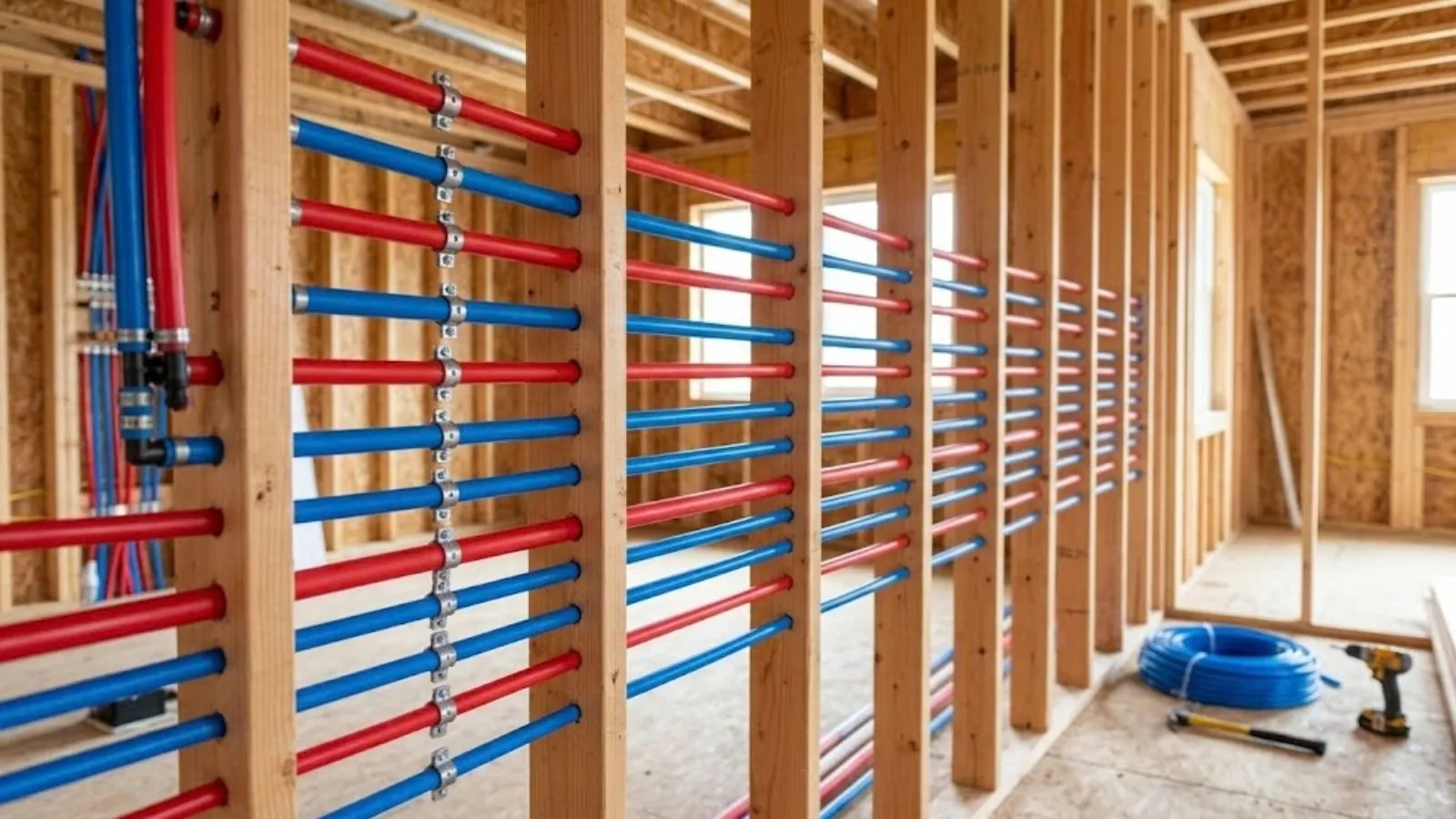
Signs the supply piping is nearing the end
Old pipes tell on themselves. Brownish water from the tap, low pressure at the far end of the house, and pinhole leaks that keep reappearing in different places all point to wear across the system rather than a single bad section.
Galvanized steel corrodes from the inside and narrows over time. Copper can develop pinholes. Some plastic systems from certain eras have a record of failing at fittings. When leaks keep multiplying, tracing each one with leak detection and patching it stops being the economical choice.
Repipe everything, or repair one section?
A repair or partial repipe fits when
- Only one run or one floor is failing
- The rest of the pipe tests sound
- The house is recently renovated with new lines in places
- You need a stopgap before a larger project
A whole house repipe fits when
- Leaks keep appearing in different spots
- Pressure is poor because pipes are internally narrowed
- The pipe material is known to fail
- You are already opening walls for a remodel
If a line has already burst, see our burst pipe repair page. This page is for planned work, where you decide the timing.
Lead and galvanized lines: the service line piece
Repiping inside the house is separate from the service line that runs from the main to your building. New Jersey law requires lead and galvanized service lines to be found and removed by 2031.
Ridgewood Water, which also serves Glen Rock, Midland Park and Wyckoff, has identified more than 3,000 lines that are wholly or partly lead. The public side, from the main to the curb, is owned by the utility. The private side, from the curb to the building, belongs to the homeowner.
If you hire your own contractor for the private side, you need to coordinate with Ridgewood Water. The utility's customer line is 201-670-5520. Our water service line repair page covers that work, and it often makes sense to plan it alongside interior repiping.
Ridgewood Water's 2019 data report put lead at the 90th percentile at 1.92 ppb, under the 15 ppb action level, with none of 31 samples over. That reflects tap sampling, not your pipes specifically. If you have galvanized or old lead-bearing parts, replacing them is still the cleaner path.
Not sure what is in your walls?
Call and we will arrange a look at your pipe material and talk through the options.
How a repiping job is planned and carried out
- 1
Assessment
We identify the pipe material, locate the main shutoff, map the runs and check pressure and flow.
- 2
Written plan
You get a scope that shows the new routes, the access points we need and how work is phased.
- 3
Notice and permit
We handle notice to the enforcing agency, the permit application and the inspection.
- 4
Rough-in and connect
New lines are run, fixtures reconnected and the system pressure tested before anything is closed.
- 5
Inspection and closeout
The work is inspected, access openings are closed or prepared for patching, and we walk through the shutoffs with you.
Materials we can quote
| Material | Strengths | Trade-offs |
|---|---|---|
| Copper | Long track record, rigid, handles heat well | Higher material cost, soldered joints, more labor |
| PEX | Flexible, fewer joints, easier to route through finished walls | Needs proper protection from sunlight and sharp edges |
| CPVC | Resistant to corrosion, lower cost | More brittle, can crack at fittings |
We recommend a material based on the access you have, the water temperature the system carries and what the code accepts. According to the state plumbing subcode at N.J.A.C. 5:23-3.15, which adopts the 2021 National Standard Plumbing Code, that standard governs how new piping is sized, joined and supported. Census data puts Ridgewood's owner-occupied rate at 82.5 percent, so most repipes here are long-term decisions by people who will keep living with the result.
What shapes a repiping quote
Pricing factors
No two houses are the same. These factors do most of the work in a quote.
Call and we will explain how these apply to your house.
Replacing piping with like capacity is minor work under the state code. Notification, a permit application within five business days and an inspection still apply. If you are planning broader work, our plumbing installation team can coordinate it.
Ready to talk repiping?
Call and describe your house and what has been happening. We will give you a plain explanation and a clear price before work starts.
Repiping questions
Repeated leaks in different places, discolored water, low pressure and a pipe material known to fail are the main signs. We check the material and test pressure before recommending anything.
Many houses take a few days, depending on size, access and phasing. We give you a window when we scope the job.
Usually yes. We phase the work so you keep water at the end of each day where possible, and we tell you in advance when the water will be off.
Often some access is needed. PEX can be fished through walls with fewer openings. We plan the access points and tell you what repair is needed afterward.
Yes. A repipe covers the pipes inside the building. The service line runs underground from the main. Both can be done together.
Replacing with like capacity is minor work. It still requires notifying the enforcing agency, a permit application and an inspection. We handle it.