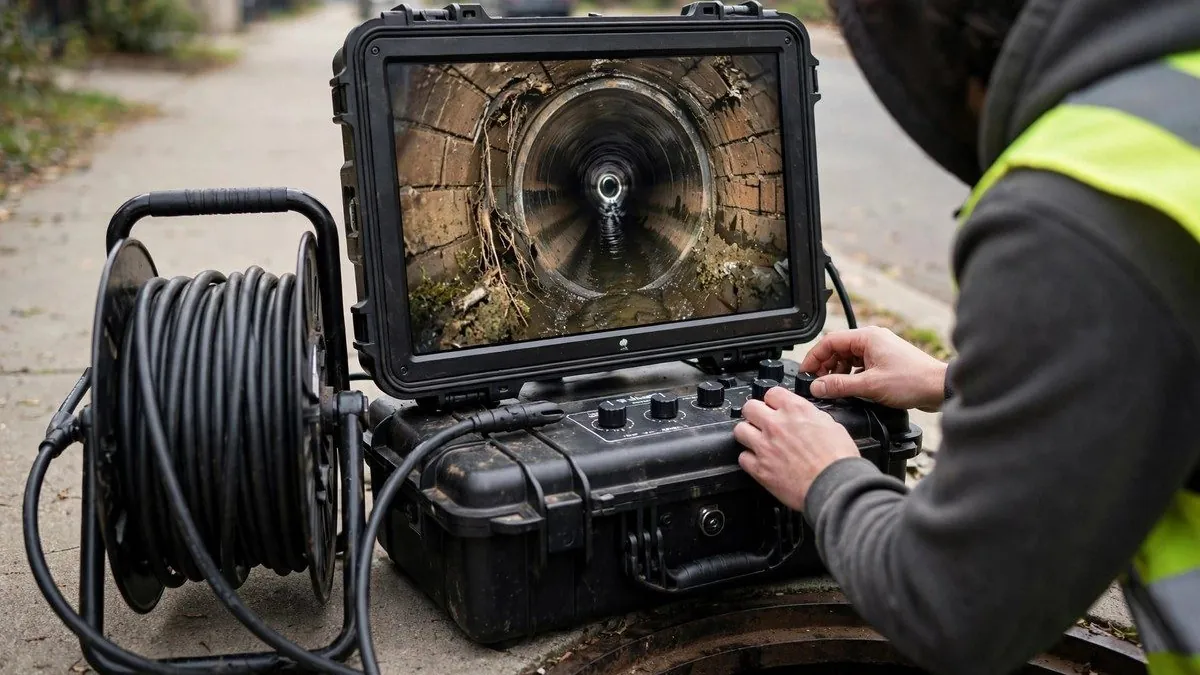
What a sewer camera inspection actually shows
The camera travels from a cleanout or an accessible fixture drain toward the street connection. As it goes, it shows the pipe material, joints, cracks, sags, roots, scale and any foreign object. A locator tool at the surface lets us mark the pipe's depth and path, which matters if you plan to dig.
You leave with an understanding of what the line looks like and what, if anything, needs doing about it. A pipe in decent shape may need nothing. A pipe with a break or a belly needs a plan.
Good reasons to schedule one
- You are buying a home and want to know what the lateral is hiding before closing.
- You plan to dig for a patio, pool, fence, addition or large tree and need the pipe's path and depth.
- Drains in the house keep slowing, and snaking has not changed anything for long.
- You are considering lining or replacing the pipe and need a baseline.
- You want to confirm a repair worked.
If the picture is bad, the next step may be sewer line repair by spot dig or lining. If the pipe is only dirty, drain cleaning or hydro jetting may be enough, and the camera shows which.
How the inspection works
- 1
Find the access point
We locate the cleanout, or pull a toilet or access a floor drain if there is no cleanout.
- 2
Run the camera
The lens goes toward the street while we watch the live image and note distance to each feature.
- 3
Locate and mark
A transmitter in the camera head lets us pin the line's path and depth at the surface.
- 4
Review and recommend
We replay the footage with you and explain what we saw and whether action is needed.
Buying or digging soon?
Call and we will fit the inspection around your closing, contractor or project schedule.
Reading the footage: what we look for
| What the camera sees | What it usually means | Typical next step |
|---|---|---|
| Roots entering at joints | A joint has opened and roots are following the moisture | Cutting or jetting, then lining or repair if joints keep failing |
| Sag or belly holding water | The pipe has settled and waste collects | Monitor, or dig and re-grade the section |
| Cracked or broken pipe | Soil load, age or damage has split the wall | Spot repair, lining or replacement |
| Scale or grease buildup | Years of deposits narrowing the pipe | Jetting or mechanical cleaning |
| Offset joint | Sections have shifted apart | Repair at the offset, often by excavation |
What Ridgewood's sewer rules mean for your lateral
According to Chapter 238 of the Village of Ridgewood Code, house sewers must be cast iron or vitrified clay beyond three feet from the building, and that they must sit deep enough to be protected from frost. So you may find either cast iron or clay in a Ridgewood lateral, and each shows its own typical wear on camera. Cast iron scales and corrodes, and clay tends to open at joints.
The same code prohibits connecting groundwater sumps to the sanitary sewer. If the camera shows an unexpected tie-in or a lot of clear water entering the pipe, that finding matters. We explain what it means for compliance before you decide what to do.
Ridgewood runs its own Water Pollution Control Facility, so the pipe in the street leads to a village-operated plant. Your lateral is the stretch between your house and that public main, and a recorded inspection gives you a clear picture of it. Homeowners in Glen Rock and other nearby towns ask us the same questions about their own laterals.
What affects the price of an inspection
Pricing factors
Camera work is priced by the job, and these are the variables.
Call and describe your situation. We will tell you what applies.
Need a camera inspection scheduled?
Call and tell us why you want it. We will book a visit and explain what we find.
Before you book a camera inspection
Most are done within an hour or two, depending on the length of the line, access and how much cleaning is needed first.
Not required, but worth doing on older homes or properties with big trees near the line. It shows the state of the pipe before you close, which gives you room to negotiate.
Yes. A locator tracks the camera head from above ground, so we can mark the route and depth before anyone digs.
A collapse, a severe offset or a large blockage can stop it. That itself is information. We note where it stopped and recommend clearing or repair.
No. Cleaning removes buildup. The camera looks. We often clean first if buildup hides the pipe, then inspect.
Yes, a recording you can share with a buyer, contractor or insurer.