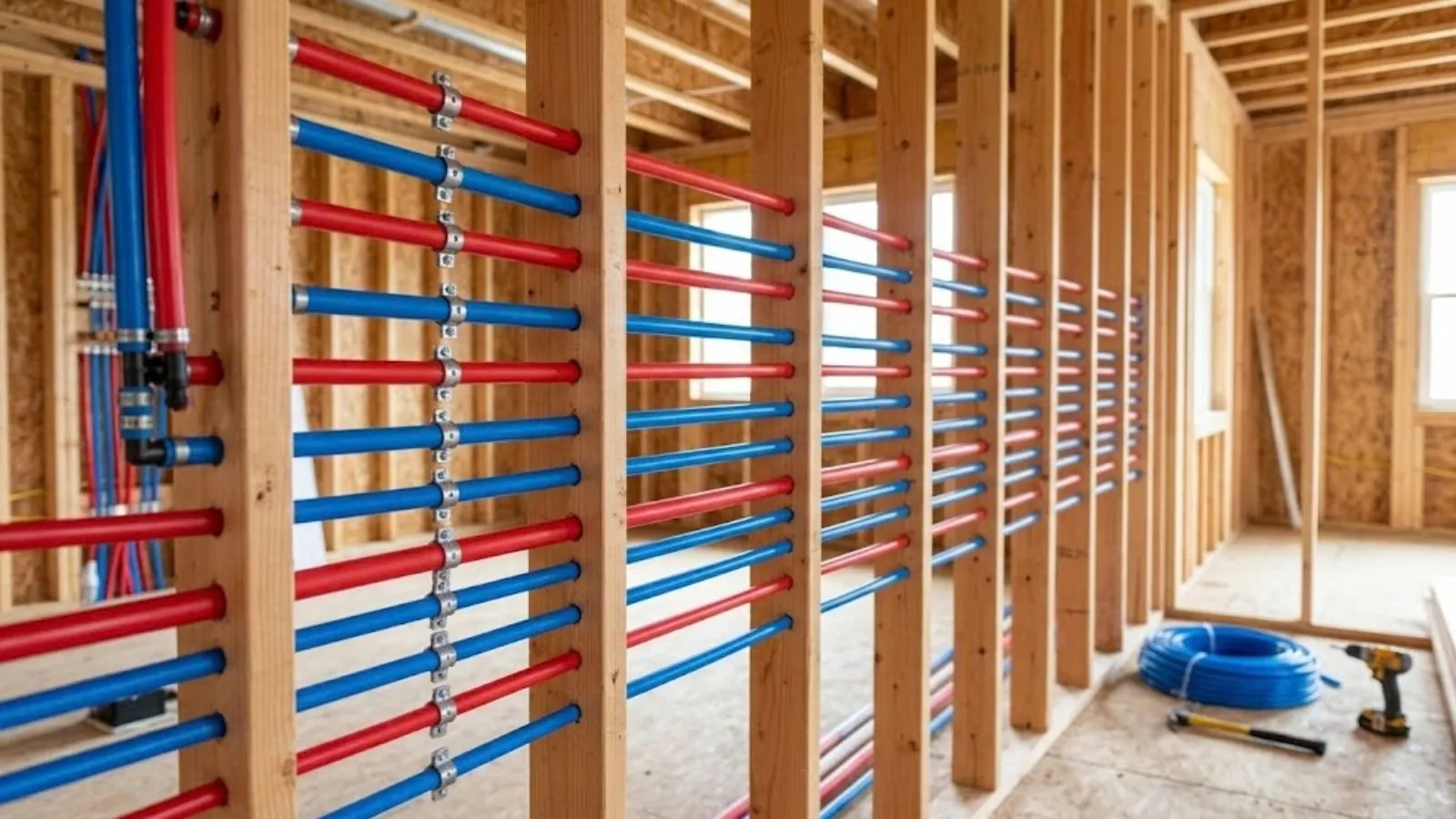
What a repipe actually replaces
A whole house repipe replaces the supply piping that carries water from the main shutoff to every fixture. That includes the hot and cold lines to sinks, tubs, toilets, the water heater, washing machine hookups and outdoor spigots.
It usually does not include the drain and waste pipes, which are a separate system. Confirm this in writing, since some homeowners expect a repipe to fix a slow drain and it will not.
Signs your home may need new supply pipes
- Brown, yellow or rusty water that returns after you run the tap for a minute
- Low pressure at several fixtures, not just one
- Repeated pinhole leaks or a pipe that has been patched more than once
- Green or white crust on exposed pipe joints
- A metallic taste or smell in the water
- Visible pipe made of galvanized steel, which rusts from the inside out
One leak does not mean the whole house needs new pipe. A plumber can repair a single failed section when the rest is sound. Repiping makes sense when leaks keep appearing or pressure is dropping because the inside of the pipe is narrowing.
Pipe materials and how they affect the bill
| Material | Cost level | Installation | Things to know |
|---|---|---|---|
| Copper | Higher | Cut, fit and solder or press fitting | Long track record, handles heat well, material price changes with the metal market |
| PEX | Lower | Flexible tubing with crimped or expanded fittings | Fewer joints, runs through walls easily, needs UV protection if exposed |
| CPVC | Lower to middle | Rigid plastic with solvent welded joints | Cost effective but can turn brittle in some conditions |
| Stainless or other specialty | Highest | Specialized fittings and tools | Used in specific cases, not typical for a home repipe |
The material is only one part of the cost. Copper has more expensive pipe and more labor per run. PEX is faster to install, but you still pay for manifolds, fittings and a plumber who knows the system. Choose the material with the plumber, based on your house and budget, not only on price.
The cost factors, ranked by how much they move the total
Repipe pricing factors
Every house is different, but these are the items that decide where your quote lands.
A good quote lists the material, the fixtures included, the wall repair plan and the permit steps.
Want your house assessed for a repipe?
A plumber can check pipe material, pressure and access, then explain what your scope would look like.
Whatever you pick has to meet the code. New Jersey's plumbing subcode, N.J.A.C. 5:23-3.15, adopts the 2021 National Standard Plumbing Code, so the inspector checks your pipe and fittings against that standard. Ask for the material and fitting type in writing before work begins.
Access is where repiping gets expensive
Pipe is cheap and getting to it is not. Homes with open basements and accessible crawl spaces let a plumber run new lines along joists with little demolition. Finished spaces and plaster walls are another story.
Ask the plumber how they plan to reach each fixture. A good answer names the access points, such as closets, basement ceilings and small cut-outs behind fixtures. A vague answer may mean broad wall cutting that costs more in repair later.
Ways to limit the damage to walls
Plumbers often use fish tape, small access holes in closets and the backs of cabinets, and PEX that bends around corners. These methods cut the amount of drywall to repair. Ask whether the quote includes patching and whether the patch is ready for paint.
Ridgewood service line and lead pipe notes
Ridgewood Water serves Ridgewood, Glen Rock, Midland Park and Wyckoff. New Jersey law requires lead and galvanized service lines to be found and replaced by 2031, and Ridgewood Water has identified more than 3,000 lines that are wholly or partly lead.
The utility owns the public side of the service line, from the main to the curb. The homeowner owns the private side, from the curb to the building. If you hire your own contractor for service line work, coordinate with Ridgewood Water first by calling 201-670-5520.
Source type: NJ Infrastructure Bank state agency notices and Ridgewood Water customer notice published through Midland Park borough
Where the service line fits into a repipe
The pipe that brings water from the street to your house is a separate project from interior repiping, but the two are often discussed together. New interior pipe does little good if the line feeding it is old, corroded or made of lead.
Ask your plumber to identify what material your service line is made of where it enters the house. Our water service line repair page explains how that work is handled, and why coordination with the utility matters.
How to compare repipe quotes fairly
- Ask each plumber to name the pipe material and fitting type in writing.
- Confirm how many fixtures and outdoor connections are included.
- Ask whether the quote covers wall patching, and to what finish.
- Check that permits and inspections are listed.
- Ask how long the water will be off each day and how it will be restored overnight.
- Find out if the water heater connections and shutoff valves are being replaced.
A quote that is much lower than the rest usually leaves something out. Common omissions are wall repair, permit costs and new shutoff valves. Ask what is not included before you compare totals.
How long the job takes and what to expect at home
Many repipes in a typical house can be completed in a few days, though complex homes take longer. Water is shut off during working hours and usually restored at the end of each day, so you can use the house in the evening.
Expect noise, dust and some furniture moving. Clear access to bathrooms, closets and the basement before the crew arrives. After the new pipes are in, the plumber tests the system under pressure and the inspector reviews the work.
Is repiping worth it?
Repiping is a long-term fix. New supply pipe restores water pressure, removes the source of rust and leak risk, and gives future buyers confidence. It does not add the visible appeal of a new kitchen, so some owners put it off until a leak forces the issue.
That delay can be costly. A slow leak in a wall can run for months before it shows, and the repair then includes mold, drywall and flooring. If your pipes are old and showing the warning signs above, planning a repipe on your schedule beats an emergency.
We serve homes in Midland Park and Fair Lawn with the same approach. For a closer look at how a project runs, see our whole house repiping service page.
Want a repipe scope written for your house?
Call and describe your pipes, your pressure and your leak history. A plumber can tell you what to expect.
Repipe cost questions
Quotes differ because of pipe material, the number of fixtures, wall access, wall repair and permits. Two quotes can look far apart when one includes patching and permits and the other does not.
PEX is usually the lower-cost option because the pipe is cheaper and faster to install. Copper costs more but has a long record and some owners prefer it. A plumber can explain which fits your house.
Not normally. The service line is a separate scope. If it is lead, galvanized or failing, discuss it with your plumber and, in Ridgewood, coordinate with Ridgewood Water.
The utility owns the public side, from the main to the curb, and the homeowner owns the private side, from the curb to the building. Call Ridgewood Water at 201-670-5520 before hiring someone for line work.
A repipe is plumbing work that normally involves a permit and an inspection. Your plumber should handle that and list it in the quote. You can also confirm with the Department of Building and Inspections.