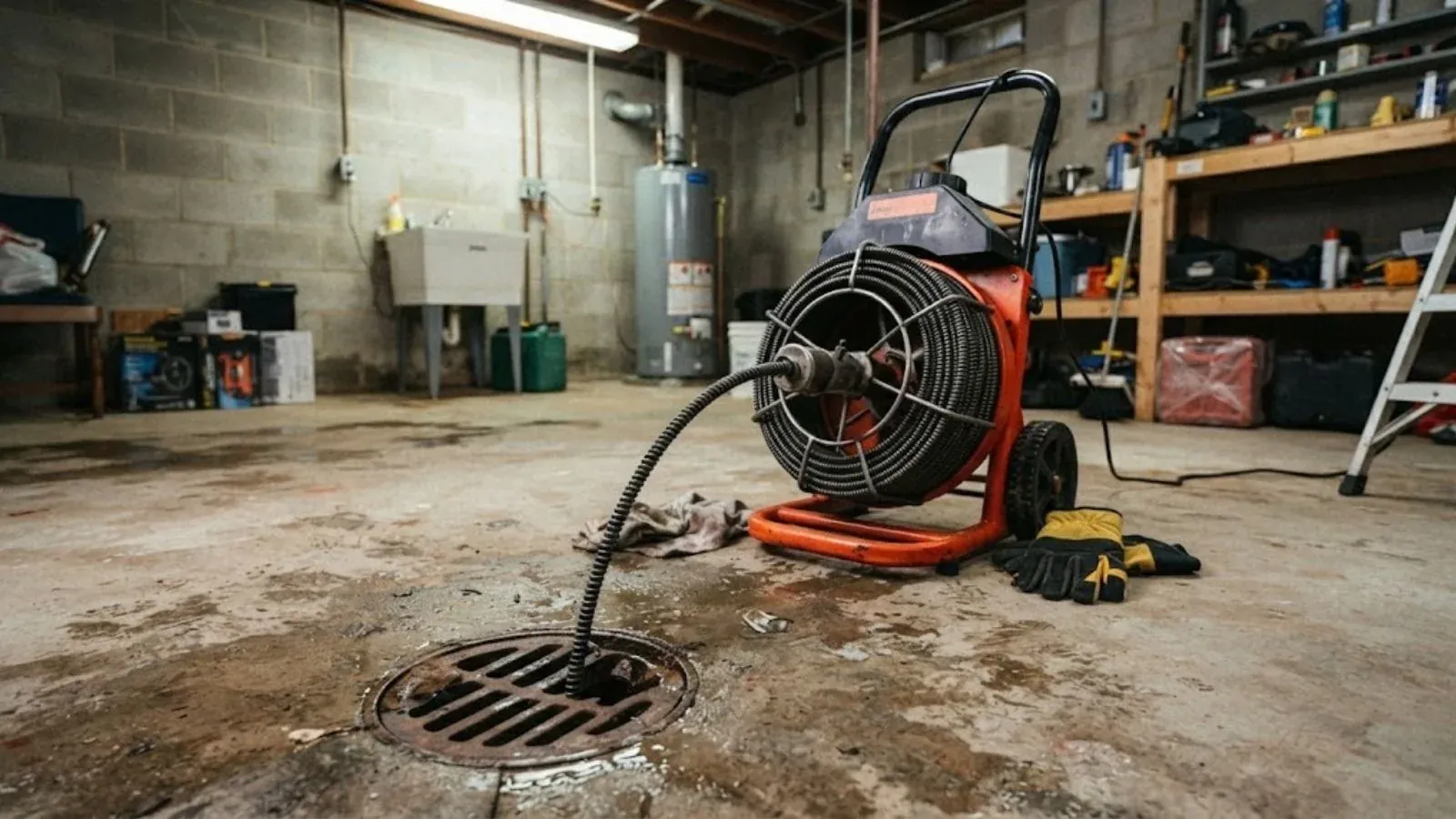
Why every drain fails at the same time
Inside your walls, each fixture has its own small branch pipe. Those branches join into a larger line, and that line runs out of the house to the sewer or septic system. Think of it as a tree. A clog in one branch affects one fixture. A clog in the trunk affects every fixture that feeds it.
When all drains are clogged, the blockage is usually in the main drain or the sewer lateral. Water has nowhere to go, so it rises through the lowest openings first. That is why the basement shower, floor drain or laundry standpipe often shows the problem before anything upstairs.
Signs that point to the main line
You do not need tools to tell a main line problem from a single clog. Look for a pattern across the house.
- Water from one fixture shows up in another. Run the washer and the tub gurgles or rises.
- Toilets flush slowly and need more than one try.
- The lowest drain in the house is the first to back up.
- Several fixtures are slow, but the slowness started at the same time.
- There is a sewer smell near floor drains, the cleanout or the yard.
One more clue is timing. If the trouble comes and goes with water use, the line is partly blocked. If it stays full no matter what, the line is closed. The first case gives you a little time. The second does not.
A simple test you can do in five minutes
You can confirm a main line problem without tools. The test below takes a few minutes and tells a plumber exactly what to expect.
- 1
Stop all water use
Turn off the washer and dishwasher and ask everyone to stop using water.
- 2
Check the lowest fixture
Look at the basement floor drain or lowest tub. Is there standing water or an odor?
- 3
Flush an upstairs toilet
Watch the lowest drain while it flushes. A bubble, gurgle or rising water confirms the main line is blocked.
- 4
Find the cleanout
Look for a capped pipe near the foundation or in the basement. Do not open it if water is rising, since sewage can come out under pressure.
What to do right now
Stop using water in the house, including toilets, showers and laundry. Every gallon you add has nowhere to go and may end up on your floor. Keep children and pets away from any standing water in the basement. Call a plumber and describe the pattern.
What causes a main line clog
Main line clogs have a handful of common causes. Knowing which one you have changes the fix, so a good plumber asks about it before reaching for a tool.
Tree roots
Roots are drawn to the moisture in sewer joints and grow through them. The pipe fills with a mat of fibers that catches everything else.
Grease and wipes
Grease coats the pipe wall, and wipes that are labeled flushable do not break up. Together they build a dam.
Broken or offset pipe
Old clay or cast iron can crack, shift or collapse. Debris catches at the damaged spot.
A belly in the line
A sagging section holds water and solids. It clogs again and again no matter how often it is cleared.
If the same line has clogged more than once, the cause is probably structural. A cable can restore flow but cannot fix a broken pipe. That is the point where a camera look becomes worth doing.
How a plumber clears the line
The usual first step is sewer line cleaning with a powered cable, the same method used in standard drain cleaning but with larger heads. The cutting head is sized to the pipe and passed through the cleanout. It breaks up roots and grease and opens a channel for the water to move.
Where roots keep coming back, or where heavy grease coats the wall, hydro jetting may be the better choice. A jet scours the whole inner surface instead of poking one hole through the blockage.
Afterward, a camera inspection shows what the cable cannot. A sewer camera inspection reveals cracks, offsets, bellies and root entry points, so you know whether the clog was a one-time event or a symptom of damage.
| Question | Cable cleaning | Hydro jetting |
|---|---|---|
| What it does | Opens a channel through the blockage | Scours the pipe wall clean |
| Best for | Soft clogs, light roots, first-time stoppages | Heavy grease, scale, repeat root growth |
| Pipe condition needed | Works on most pipes | Pipe should be sound enough for pressure |
| Camera check | Recommended after | Often done before or after |
Drains backing up right now?
Call (973) 488-5410 and tell us which fixtures are affected. Stop water use until help arrives.
What not to do when everything is clogged
The first hour matters. These habits turn a clog into a cleanup, so avoid them.
- Do not keep flushing to see if it clears. Each flush adds volume to a full line.
- Do not pour chemical cleaners into several drains. They rarely reach a main line clog and they harm the people who work on it afterward.
- Do not run a garden hose or pressure washer into the cleanout.
- Do not wade through sewage water in bare feet. It carries bacteria.
- Do not ignore the first slow signs. A full backup usually starts as a mild one.
Sewer rules that apply in Ridgewood
The Village of Ridgewood publishes its code through ecode360. Chapter 238 prohibits discharging stormwater, groundwater, roof, pool or sump water into the sanitary sewer. A separate section says groundwater sumps shall not be connected to a discharge point that feeds the sanitary sewage collection system. The sump article also describes inspections and a monthly surcharge to the owner until a connection is corrected.
Another section says house sewers beyond three feet from the building must be cast iron or vitrified clay. Both materials can crack or shift with age. If your backup happens during or right after heavy rain, mention it to the plumber, because water entering the sewer from the wrong source can overload the line.
Source type: Village of Ridgewood Municipal Code, Chapter 238 (ecode360)
When a backup is also a cleanup job
If sewage has reached floors or walls, clearing the line is only part of the job. Porous materials such as carpet, drywall and insulation that got wet with sewage usually have to be removed. Your insurance policy may or may not cover backup damage, so read it or call your agent early.
Take photos before you clean. Keep notes of when the problem started and who you called. Those details help any claim and help the plumber understand the cause.
Preventing the next one
Keep grease out of the kitchen drain, and put wipes, paper towels and feminine products in the trash. Have trees near the sewer path checked if clogs keep returning. A scheduled cleaning every year or two makes sense for lines with a history of roots.
Homeowners in Fair Lawn and Glen Rock face the same pattern, and our crews serve both towns. Knowing where your cleanout is before an emergency is the single most useful thing you can do.
What the work depends on
Clearing a main line is priced by the job, not by a flat rate. These are the pieces that change the total.
What drives the price of clearing a main line
Prices vary because jobs vary. These are the items that matter most.
Your plumber will explain the price before starting.
All the drains backing up?
Call (973) 488-5410 now. Stop water use until a plumber arrives.
Questions homeowners ask
A partial main line blockage lets some water through. It is an early warning, and a full stoppage can follow. Have the line looked at before it closes.
Rarely. A soft blockage may shift for a while, but roots and grease grow back. The line should be cleaned and inspected.
Responsibility depends on where the blockage sits and how your connection is set up. Ask your plumber to note the location, and confirm ownership of any lateral section with the village before you assume.
They can. Extra water from sumps or storm sources can overload a sanitary line, which is why village code bars those discharges. If backups follow storms, tell your plumber.
As soon as you see the pattern. Stop using water and call. Every flush adds to the problem.